EN

The Iceman Cometh
by
Folkert de Jong
Grotesque, baby-blue figures of veterans from The Iceman Cometh (2001) stand still in foam, as if they have awoken from an icy dream. The expressions in the enormous work of Folkert de Jong balance between vulnerability and absurdity. Nearby the parade lies Trijn Rembrandt (2023), a fallen freedom fighter from Dutch colonial history. On a Chesterfield sofa, a female double portrait radiates both glamour and threat in Peckhamian Mimic (2007).
Together, the three sculptures weave the themes Folkert has explored for decades: the thin line between fiction and truth, the attraction of deception, and the traces of power, consumption, and conflict. These works surround the visitor in theatrical scenes that feel familiar and strange at the same time. A fragile question mark asking how we tell stories from the past.
Years | 2001, 2007, 2023 |
Type | sculptures |
Material | styrofoam, polyurethane foam |
Work in Progress
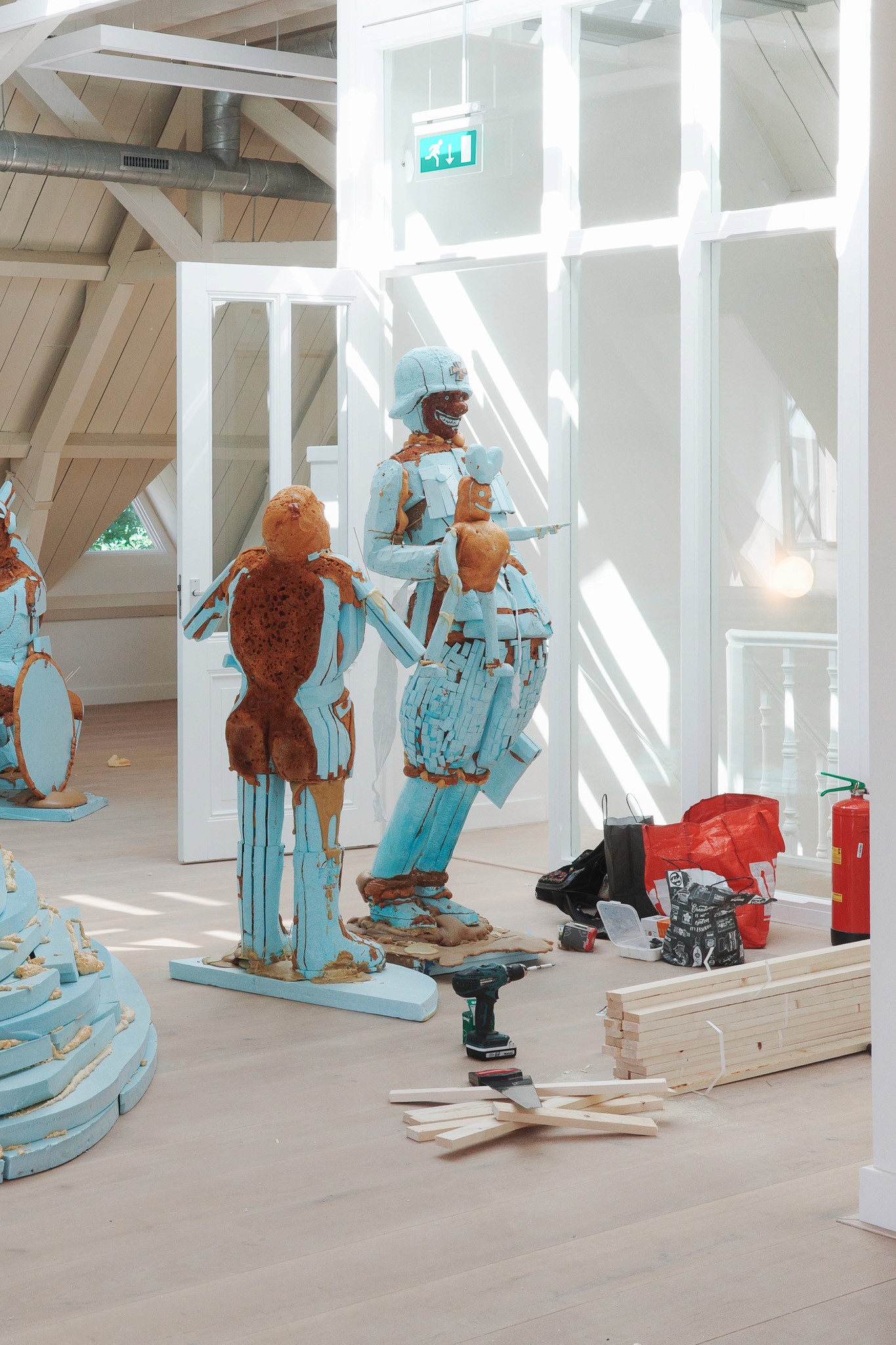
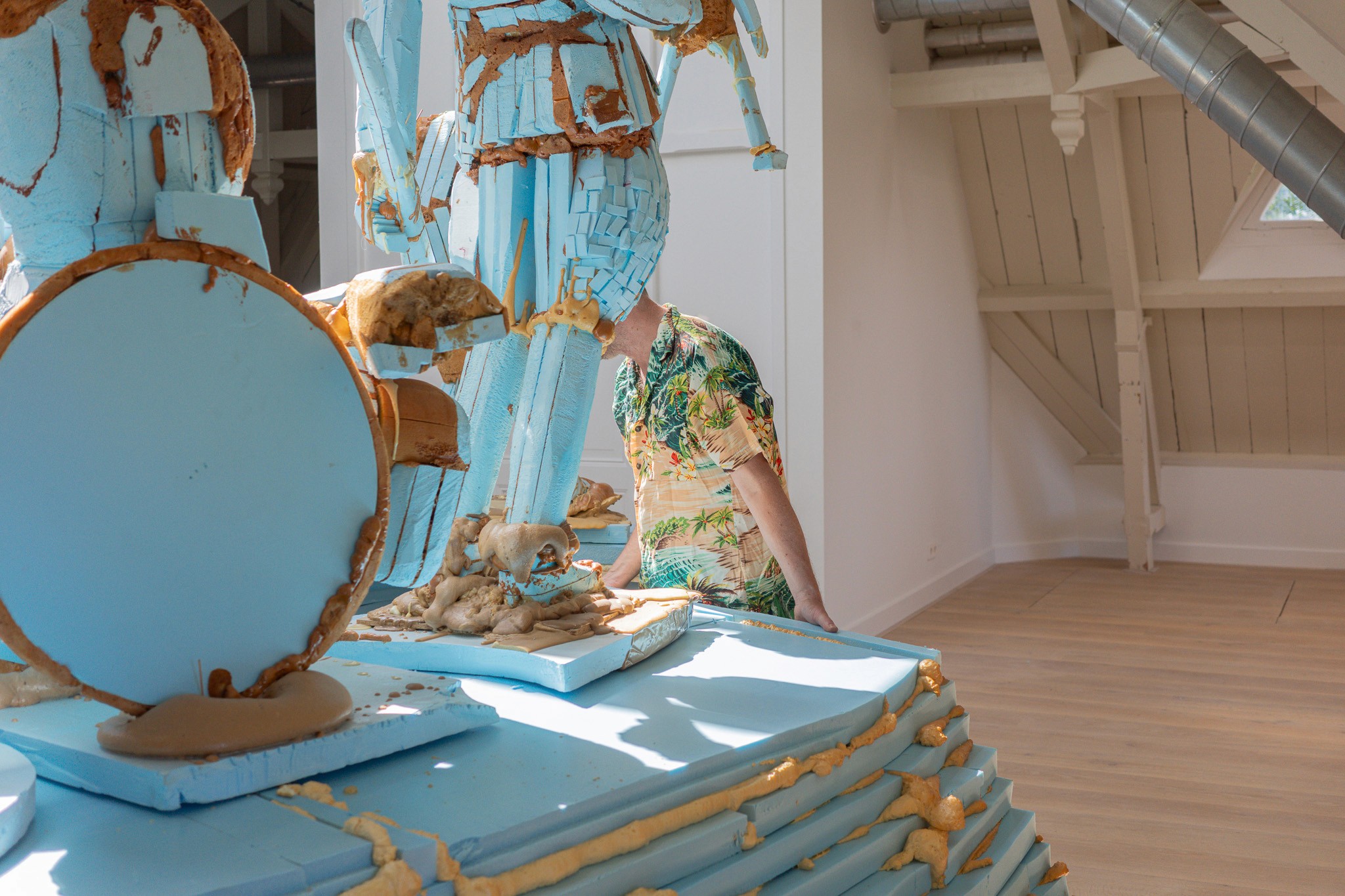

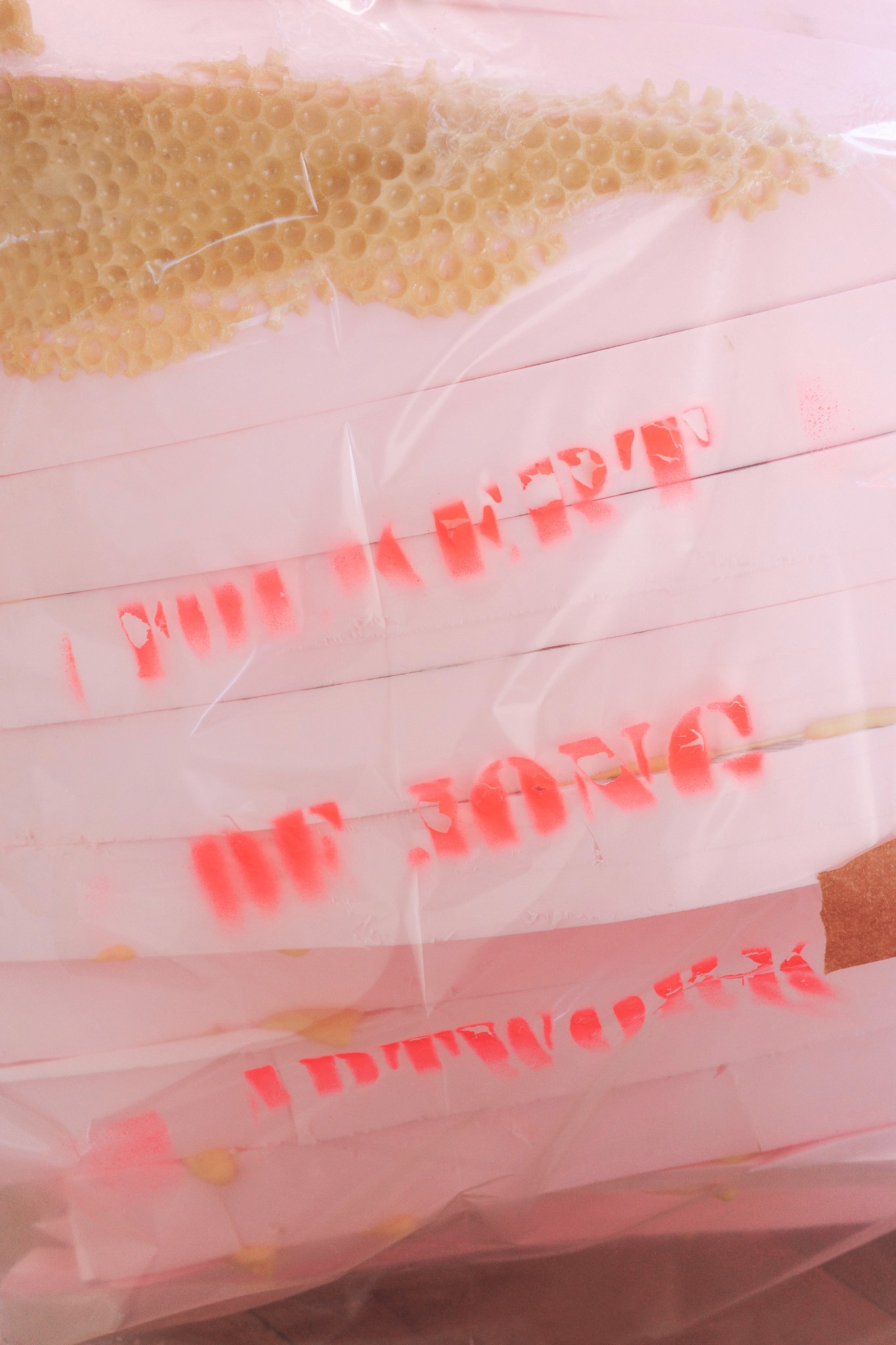
Folkert first created The Iceman Cometh for an exhibition at Stedelijk Museum Bureau Amsterdam in 2001. For this work, he first reached for the materials which from that point became his signature. Styrofoam and polyurethane foam are typically used for insulation in construction, even in Hollywood to quickly build-up large sets. Using this unconventional, petrochemical-based material, Folkert was able to assemble an enormous scene without the burden of weight. Over the years, Folkert’s foam sculptures have become more technically refined and painterly. His earlier works appear rough, often in the monochrome blue and pink tones of raw Styrofoam. Later, he introduced a richer colour palette, cleverly blending figuration, abstraction, and symbolism.
“My stories often deal with conflict. Those situations are always interesting because they bring out the best and worst in people. They raise the question: how would you act yourself?”
The three sculptures balance between the bizarre and the vulnerable, recognisably figurative on the one hand, abstract and full of symbolism on the other. Through the raw energy and theatrical character of his work, Folkert invites you to become part of the spectacle, a world in which history, myth and contemporary reality collide impressively.
Trivia
For Trijn Rembrandt, Folkert has cast the arms and legs of his own daughter to make the figure come to life.
Folkerts book “Ministry of Fear/Foam” is available in the shop downstairs!
About Folkert de Jong
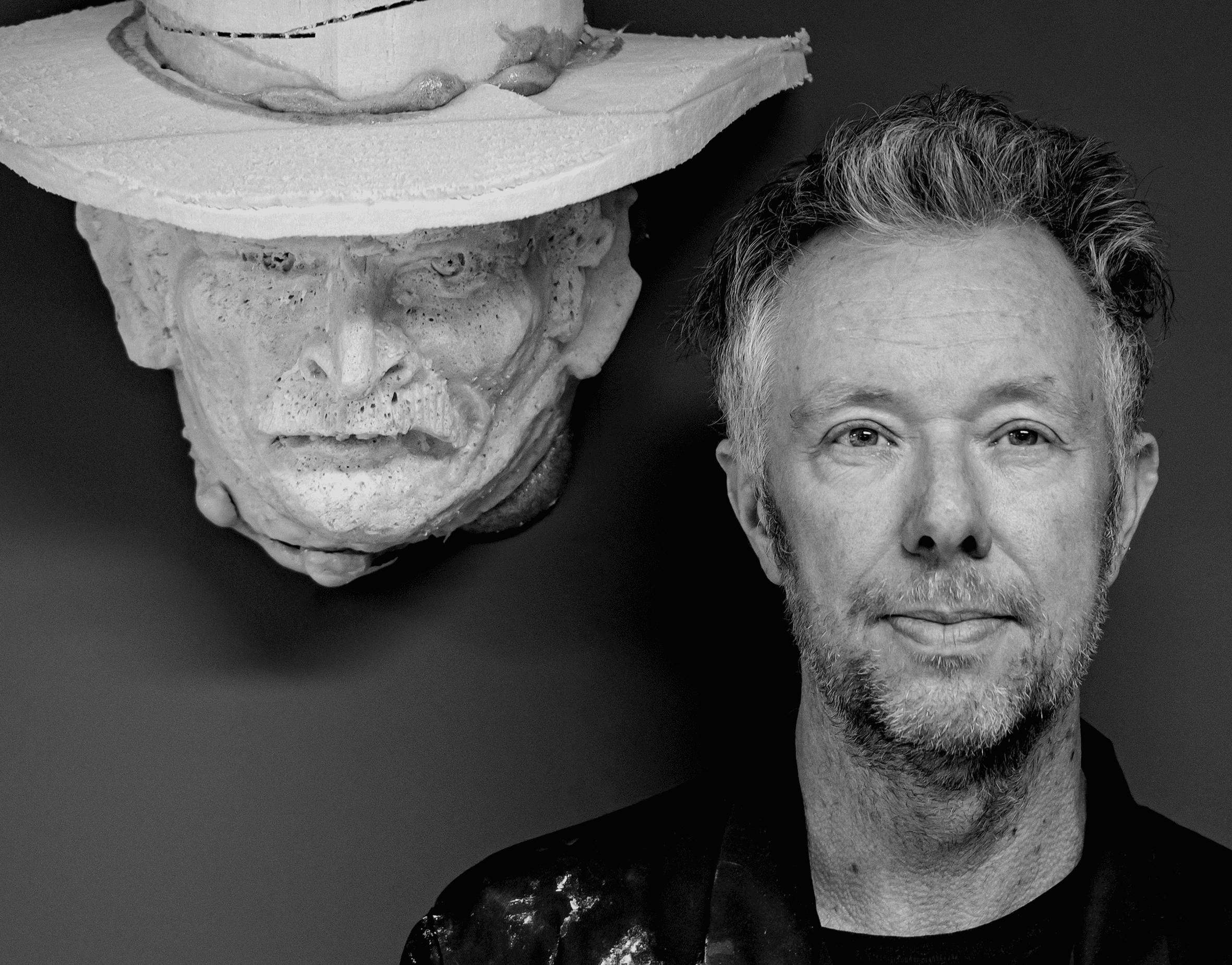
Folkert de Jong (1972) is known for his life-sized sculptures, in which history and the present merge. His figures frequently draw from historical events, reimagining them through a contemporary lens to explore themes of identity, morality, and societal structures. Fascinated by the darker corners of the human psyche, he creates grotesque worlds that explore power, violence, and human ambition in his signature foam. Folkert’s approach is both sculptural and painterly, evolving from early monochromatic pieces to layered compositions. His theatrical scenes invite viewers to engage physically and emotionally. Folkert was awarded the Prix de Rome for sculpture in 2003. His work has been exhibited internationally, including New York, Los Angeles, Sydney, London, Athens, and Ghent. He is based in Amsterdam, his studio where he works is in Almere Buiten.
The Madness of People
Over het werk van
Folkert de Jong
In Villa’s attic stands The Iceman Cometh by Folkert de Jong. The base of the work is a massive island, built from sheets of light blue styrofoam that get smaller toward the top, forming a pyramid-like shape. The sheets are joined with polyurethane foam, better known as “purschuim”. So much foam was used that it oozes over the edges of the sheets.
On this island, various figures are arranged, all made from the same material and in the same colors: light blue and beige. They are soldiers. At the very front stands a figure in a rabbit costume, with a massive erection and a pistol in hand. Behind him follows a procession of soldiers with amputated legs, severed arms, and waving weapons. All the figures are exuberantly and expressively crafted. At first glance, it seems like a cheerful parade of people raising their arms in celebration. But a closer look reveals the madness surrounding them. Twisted and wild, they spill down the battlefield.
Shortly after graduating from the Rijksakademie in Amsterdam, Folkert began this monumental project in 2001, featuring disabled soldiers as the main characters. He drew inspiration for these figures from stories about World War I, a war in which madness was normalized because reality was otherwise unbearable.
The title The Iceman Cometh comes from a 1939 play by Eugene O’Neill about a group of anarchists who lose themselves in alcohol and intoxication to forget themselves. Folkert says: “We are constantly striving for development and progress, but the question is whether we have truly come much further than a few centuries ago. I use many motifs from vanitas symbolism, and my subjects are sometimes depressing. Through sensory, provocative colors and forms, I can soften that heaviness. My stories often deal with conflict. Those situations are always interesting because they bring out the best and worst in people. They raise the question: how would you act yourself?”
Polyurethane Foam
In this work, Folkert used styrofoam as a sculptural material for the first time. During World War II, rubber was scarce for the Allies because Japan occupied the main rubber-producing countries in Southeast Asia. While attempting to create a substitute for rubber, styrofoam was discovered by accident. It proved an excellent alternative and was soon used for military purposes, including the construction of fighter planes. Folkert found this military origin both fascinating and disturbing due to its unethical and environmentally harmful aspects. The seriousness of the material stands in sharp contrast to the grinning, exuberant figures in his work.
Since 2001, he has frequently used styrofoam and purschuim in his installations and sculptural groups. He wants to draw attention to materials that, while relatively unknown, are present in almost every household—insulation in refrigerators, coffee machines, homes, and mattresses.
In his oeuvre, Folkert creates grotesque worlds in which power, violence and disaster take center stage. Each piece shows that madness is a human trait. Over the years, his sculptures have become increasingly painterly. They seem almost alive, as tall as a human body. Initially, his works, like The Iceman Cometh, were often light blue or pink, the original colors of styrofoam. Today he also uses other colors, as in Peckhamian Mimic, 2nd Commandment, which is also on view at Villa.
Choices
Peckhamian Mimic, 2nd Commandment is also made from styrofoam and purschuim, but this time painted white, black, and orange. The work dates from 2007. The female figure, sitting invitingly on the arm of a chair, is a combined double portrait of Leni Riefenstahl and Marlene Dietrich. Where Riefenstahl used her talent and femininity for Nazi propaganda, Dietrich chose to make a career in Hollywood. In this work, war also plays a central role, but the focus is on making choices and their consequences.
The Chesterfield chair, cast in purschuim, symbolizes capitalism and decadence for Folkert. The pink styrofoam hat refers to showmanship and dominance. The teeth in the head are made of artificial gemstones, a so-called “golden smile” symbolizing seduction. The chair invites you to sit, but it is deceptive—it is fake. In this way, Folkert also seduces the viewer.
Judgment
The last sculpture by Folkert in the attic is titled Trijn Rembrandt and was made in 2023. The figure shows a sixteenth-century woman lying on the ground. This work is about female heroes. According to some stories, a young woman played a key role in the resistance against the Spanish occupation of Alkmaar in 1573. Her name may have been Catharina Rembrandt.
However, much about her story is unclear. Catharina, also called Trijn, was sixteen years old. In historical records, fact and fiction are intertwined. Folkert wanted to honor her by portraying her. He expressed the doubt about her heroism by depicting her lying down, as if the judgment of our time had removed her from her pedestal.
For Folkert, this work is about reconsidering moral events from Dutch history. A new perspective on the past says a lot about how we act in the present. And perhaps people in the future will similarly judge who was right or wrong in our time.